In continuation of my previous post which speaks of the Guatemalan right wing's feedback to Rios-Montt trial. The main idea of Guatemalan right is to reject the term of "genocide" and replace it with the term "internal armed conflict" for the purposes of, as I see it, 1) changing the penalty for Rios Montt and his men for lighter term, and 2) presenting Guatemala in a more favourable light before the U.S. (or international community), because "genocide" sounds bad, but "internal conflict" is much more acceptable.
But going back to Guatemala's history provides enough information to prove that genocide took place. For example, we may look through the general timeline of events, and choose details of Victoria 82 and Sofia military operations which were run based on "frijoles and fusiles" policy, where civilians didn't receive any "frijol" as promised by military rhetorics, but just "fusiles".
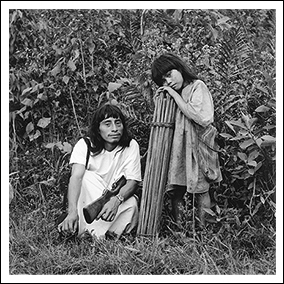
Indigenous people being misplaced by the army.
Translate
Showing posts with label indigenous peoples. Show all posts
6 Jun 2013
3 Jun 2013
¿Hubo genocidio?
Estoy leyendo la prensa guatemalteca e internacional
sobre el juicio contra Rios-Monnt. Lo
primero que me dió sorpresa fue la polarización entre guatemaltecos iniciada por
el presidente del pais y su slogan popular
que “No hubo genocidio”. Vista por fuera,
toda esa discusión o mejor decir, la
campaña mediatica se revuelve alrededor del termino “genocidio” construido por
expertas de ONU, segun dice Sr Presidente y sus seguidores, tales como historiador
Carlos Sabino de la UFM (de quien jamas
sabiamos aqui en Rusia, pero lo conocimos através de una persona yacuto-rusa que lo anunció
por medio de LiveJournal como “su amigo personal”).
Sin embargo, creemos que a esta discusion sobre los terminos juridicos, la desconocen miles de indigenas ya muertos o los que han sobrevivido matanzas y reclutamientos forzados a los PAC, igual que las muertes de sus familiares, violaciones y perdidas de su identidad cultural.
El artìculo en The Wall Street Journal identificó el
juicio contra Rios Montt como “absurdo”, porque, escribe,
“ In the trial, the prosecution presented the testimony of numerous Indians who had been victims of the violence. But their stories could not prove genocide. (sic!)
Neither did the prosecution's "experts," mostly foreigners of the leftist persuasion who were not actually witnesses to any alleged acts of genocide. They were used to advance the prosecution's case that the army strategy "to exterminate" subversives was the same thing as an attempt to "exterminate" the Ixil people.
8 Apr 2013
Evangelising Lacandons: Problems of Ethics
The Lacandon selva in Chiapas has become a bundle of problems - political, social, economic, ethnic and demographic - since the 70-s of the last century.
The sadly famous Law of the "Brecha Lacandona" was preceded by a series of government's attempts to preserve the selva from destruction caused by logging, cattle breeding, farming, migrating of population and other invasions which threatened its integrity. (Read more...)
20 Feb 2013
Mediators' Position in Armed Conflicts (Zapatista case)
(a Russian opinion or, rather, question relating to the well-known Mexico's event)
It seems interesting how Mexican CONAI (National Comission for Intermediation) defines their moral position while negotiating the peace between government and indigenous rebels.
The CONAI was created in 1995 by Chiapas bishop Samuel Ruiz Garcia with views to help establish the peace process after armed rebellion by EZLN ( indigenous neo-Zapatistas) which took place on 1 January 1994. Immediately after the conflict, a very unstable truce was established in Chiapas, so bishop Samuel Ruiz put forward his peace initiative proposing himself and his Commission as mediators between the rebels (who were mostly of his congretation) and the government. Soon CONAI was recognised by then Mexican president Carlos Salinas de Gortari as a lawful mediator between the EZLN and Government representatives.
Anyway, after three-year process of peace negotiations, in 1998 the CONAI withdrew from the negotiation process. Bishop Ruiz explained this action as a protest again government's infulfilment of San-Andres Accords. In response to this claim, he was accused by various officials of "evading his mediator's duty" and "non-neutrality". Indeed, mediators' code of conduct reads that they shall be neutral and promote the process of negotiation by being impartial and free of any personal or political preferences, as well as be adamant against any external pressure.
Miguel Alvarez Gandara, then CONAI Secretary, explained the Commission's moral position by arguing their moral standpoint:
The CONAI, - he said, - was an independent entity which was impartial to all parties in the conflict. The accusations of non-neutrality refer mostly to CONAI's moral position which they assumed from the very beginning of the armed conflict - the CONAI was seeking to build the type of negotiation which would eliminate the real roots of the conflict, and namesly, disrespect and exclusion of indigenous peoples of Mexico. The only resolution of the conflict, as it was seen by multiple experts, opposition politicians, observers and majority of Mexicans, might be found only in pursuing the appropriate and relevant constitutional reforms granting indigenous peoples the status of "public law entities", not "objects" by public law to be easily manipulated by unstable and ever changing political situation.
Pablo Gonzalez Casanova, one of the Mexican most prominent intellectuals, ex rector of the UNAM (Autonomous University of Mexico) and a former member of CONAI, formed this standpoint by saying that he "cannot remain neutral while facing the truth."
Shall a mediator be neutral as it is demanded by his/her job position? Shall he/she seek the real solution of the conflict, or confine himself with pacification measures only? What is the real objective of political mediation?
It seems interesting how Mexican CONAI (National Comission for Intermediation) defines their moral position while negotiating the peace between government and indigenous rebels.
The CONAI was created in 1995 by Chiapas bishop Samuel Ruiz Garcia with views to help establish the peace process after armed rebellion by EZLN ( indigenous neo-Zapatistas) which took place on 1 January 1994. Immediately after the conflict, a very unstable truce was established in Chiapas, so bishop Samuel Ruiz put forward his peace initiative proposing himself and his Commission as mediators between the rebels (who were mostly of his congretation) and the government. Soon CONAI was recognised by then Mexican president Carlos Salinas de Gortari as a lawful mediator between the EZLN and Government representatives.
Anyway, after three-year process of peace negotiations, in 1998 the CONAI withdrew from the negotiation process. Bishop Ruiz explained this action as a protest again government's infulfilment of San-Andres Accords. In response to this claim, he was accused by various officials of "evading his mediator's duty" and "non-neutrality". Indeed, mediators' code of conduct reads that they shall be neutral and promote the process of negotiation by being impartial and free of any personal or political preferences, as well as be adamant against any external pressure.
Miguel Alvarez Gandara, then CONAI Secretary, explained the Commission's moral position by arguing their moral standpoint:
The CONAI, - he said, - was an independent entity which was impartial to all parties in the conflict. The accusations of non-neutrality refer mostly to CONAI's moral position which they assumed from the very beginning of the armed conflict - the CONAI was seeking to build the type of negotiation which would eliminate the real roots of the conflict, and namesly, disrespect and exclusion of indigenous peoples of Mexico. The only resolution of the conflict, as it was seen by multiple experts, opposition politicians, observers and majority of Mexicans, might be found only in pursuing the appropriate and relevant constitutional reforms granting indigenous peoples the status of "public law entities", not "objects" by public law to be easily manipulated by unstable and ever changing political situation.
Pablo Gonzalez Casanova, one of the Mexican most prominent intellectuals, ex rector of the UNAM (Autonomous University of Mexico) and a former member of CONAI, formed this standpoint by saying that he "cannot remain neutral while facing the truth."
Shall a mediator be neutral as it is demanded by his/her job position? Shall he/she seek the real solution of the conflict, or confine himself with pacification measures only? What is the real objective of political mediation?
11 Feb 2013
Zapatistas' Mexican Agenda - Why Autonomy, Not Separatism?
Gary Gossen in his article "Maya Zapatistas Move to the Ancient Future" provides his view on one of the core points that Zapatistas demanded in the course of San-Andres negotiations: this point is indigenous autonomy.
Why autonomy, but not separatism? Why neo-Zapatista agenda coincides with the national agenda of Mexico? Why Mayan Zapatistas do not see their future apart from the Mexican state and Mexican nation? Why do they want to be Mexicans?
Gary Gossen, one of the most prominent Mayanists undertakes to answer these questions, and his arguments seem to be quite convincing. Gossen argues that among the Tzotziles, for example, foreign "heroes", regardless of their positive or negative nature in indigenous perceptions, are very commonly taken as a "necessary precondition for collective identity within the Chamula pattern of historical memory and being in the present" (see Gossen 1993).
For example, Miguel Hidalgo (the father of Mexican Independence) and Erasto Urbina (local hero of Chiapas) are both ladinos and bearers of Mexican mestizo culture, yet Mayan Indians perceive them as part of their indigenous history. Emiliano Zapata, a "campesino" leader of the Mexican Revolution and also being mestizo (not Indian) has become a hero of the Mayan indigenous peoples of Chiapas. From the point of view of religion, Catholic saints have always played and are playing a very important and active role in modern Mayan panteon: in particular, St Jerome is considered to be a keeper of animals and animal soul's companion (nahualli). At the same time, surprisingly, the heroine of the Mexican history and "mother" of all Mexicans, legendary Malinche is known in Chamula culture as "Nana Maria Cocorina", wearing a ladino dress "and is ritually addressed as xinulan antz, "stinking ladino woman"."
So why ladinos have become an inseparable part of the Mayan culture? Why sub-comandante Marcos, also being a ladino among Indians, has been entrusted the role of spokesperson of the Mayan rebels?
According to Gary Gossen, "Mayans have always constructed enthnicity, cosmology, historical reckoning and political legitimacy by drawing freely from symbolic and ideological forms of other ethnic and political entities - particularly those perceived to be stronger than themselves - in order to situate and center themselves in the present. Therefore, what I have identified as the apprently anomalous and peculiar link of the Zapatistas to foreign alliances and symbolic affiliations - including Marcos, white foreign martyrs, the paladin of Zapata and the Mexican revolutionary ideology that he embodies - is not at all strange to the Maya imagination. In fact, such alliances appear to have been a centrally important strategy for Maya cultural affirmation and political legitimacy since well before the contact period."
Why autonomy, but not separatism? Why neo-Zapatista agenda coincides with the national agenda of Mexico? Why Mayan Zapatistas do not see their future apart from the Mexican state and Mexican nation? Why do they want to be Mexicans?
Gary Gossen, one of the most prominent Mayanists undertakes to answer these questions, and his arguments seem to be quite convincing. Gossen argues that among the Tzotziles, for example, foreign "heroes", regardless of their positive or negative nature in indigenous perceptions, are very commonly taken as a "necessary precondition for collective identity within the Chamula pattern of historical memory and being in the present" (see Gossen 1993).
For example, Miguel Hidalgo (the father of Mexican Independence) and Erasto Urbina (local hero of Chiapas) are both ladinos and bearers of Mexican mestizo culture, yet Mayan Indians perceive them as part of their indigenous history. Emiliano Zapata, a "campesino" leader of the Mexican Revolution and also being mestizo (not Indian) has become a hero of the Mayan indigenous peoples of Chiapas. From the point of view of religion, Catholic saints have always played and are playing a very important and active role in modern Mayan panteon: in particular, St Jerome is considered to be a keeper of animals and animal soul's companion (nahualli). At the same time, surprisingly, the heroine of the Mexican history and "mother" of all Mexicans, legendary Malinche is known in Chamula culture as "Nana Maria Cocorina", wearing a ladino dress "and is ritually addressed as xinulan antz, "stinking ladino woman"."
So why ladinos have become an inseparable part of the Mayan culture? Why sub-comandante Marcos, also being a ladino among Indians, has been entrusted the role of spokesperson of the Mayan rebels?
According to Gary Gossen, "Mayans have always constructed enthnicity, cosmology, historical reckoning and political legitimacy by drawing freely from symbolic and ideological forms of other ethnic and political entities - particularly those perceived to be stronger than themselves - in order to situate and center themselves in the present. Therefore, what I have identified as the apprently anomalous and peculiar link of the Zapatistas to foreign alliances and symbolic affiliations - including Marcos, white foreign martyrs, the paladin of Zapata and the Mexican revolutionary ideology that he embodies - is not at all strange to the Maya imagination. In fact, such alliances appear to have been a centrally important strategy for Maya cultural affirmation and political legitimacy since well before the contact period."
Subscribe to:
Posts (Atom)