In continuation of my previous post which speaks of the Guatemalan right wing's feedback to Rios-Montt trial. The main idea of Guatemalan right is to reject the term of "genocide" and replace it with the term "internal armed conflict" for the purposes of, as I see it, 1) changing the penalty for Rios Montt and his men for lighter term, and 2) presenting Guatemala in a more favourable light before the U.S. (or international community), because "genocide" sounds bad, but "internal conflict" is much more acceptable.
But going back to Guatemala's history provides enough information to prove that genocide took place. For example, we may look through the general timeline of events, and choose details of Victoria 82 and Sofia military operations which were run based on "frijoles and fusiles" policy, where civilians didn't receive any "frijol" as promised by military rhetorics, but just "fusiles".
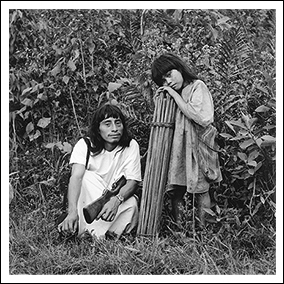
Indigenous people being misplaced by the army.
Translate
6 Jun 2013
3 Jun 2013
¿Hubo genocidio?
Estoy leyendo la prensa guatemalteca e internacional
sobre el juicio contra Rios-Monnt. Lo
primero que me dió sorpresa fue la polarización entre guatemaltecos iniciada por
el presidente del pais y su slogan popular
que “No hubo genocidio”. Vista por fuera,
toda esa discusión o mejor decir, la
campaña mediatica se revuelve alrededor del termino “genocidio” construido por
expertas de ONU, segun dice Sr Presidente y sus seguidores, tales como historiador
Carlos Sabino de la UFM (de quien jamas
sabiamos aqui en Rusia, pero lo conocimos através de una persona yacuto-rusa que lo anunció
por medio de LiveJournal como “su amigo personal”).
Sin embargo, creemos que a esta discusion sobre los terminos juridicos, la desconocen miles de indigenas ya muertos o los que han sobrevivido matanzas y reclutamientos forzados a los PAC, igual que las muertes de sus familiares, violaciones y perdidas de su identidad cultural.
El artìculo en The Wall Street Journal identificó el
juicio contra Rios Montt como “absurdo”, porque, escribe,
“ In the trial, the prosecution presented the testimony of numerous Indians who had been victims of the violence. But their stories could not prove genocide. (sic!)
Neither did the prosecution's "experts," mostly foreigners of the leftist persuasion who were not actually witnesses to any alleged acts of genocide. They were used to advance the prosecution's case that the army strategy "to exterminate" subversives was the same thing as an attempt to "exterminate" the Ixil people.
20 May 2013
REDD Programme in Chiapas: Controversy
I make a re-post of this text from Global Justice Ecology.org, as it narrates controversy about implementation of the REDD programme in Chiapas. Also, it is noted that a demarcation line is finally being made to define the borders of the "Zona Lacandona" (forty years after the law of the Brecha Lacandona was enacted and thirty-six years after Montes-Azules nature reserve was established in the selva). It's still worth mentioning that inability of Mexican bureaucratic authorities to define the "nuclear" zone of the selva led to multiple evictions of indigenous communities from their lands (see the above link to Pangea web-page).
In the reposted article, the special emphasis is made on the miserable destiny of lacandones who became, consciously or unconsciously, traitors of their indigenous identity:
==While the members of the Lacandon Community are the beneficiaries of both the monthly REDD payment and access to vast territory, such benefits come at a high cost. In the words of Miguel Angél García, Coordinator of the Chiapan NGO Maderas del Pueblo, “Of all the ethnic groups in Chiapas, the one that has suffered the greatest abuse of their rights are the Lacandones; they’ve been robbed of their history, of their identity, and of their dignity, and they’ve been turned into walking folkloric entities. There’s nothing worse than that.”==
Read the full text:
(La Selva Lacandona, Carretera Fronteriza. Photo is mine, year 2005)
In the reposted article, the special emphasis is made on the miserable destiny of lacandones who became, consciously or unconsciously, traitors of their indigenous identity:
==While the members of the Lacandon Community are the beneficiaries of both the monthly REDD payment and access to vast territory, such benefits come at a high cost. In the words of Miguel Angél García, Coordinator of the Chiapan NGO Maderas del Pueblo, “Of all the ethnic groups in Chiapas, the one that has suffered the greatest abuse of their rights are the Lacandones; they’ve been robbed of their history, of their identity, and of their dignity, and they’ve been turned into walking folkloric entities. There’s nothing worse than that.”==
Read the full text:
(La Selva Lacandona, Carretera Fronteriza. Photo is mine, year 2005)
A Broken Bridge to the Jungle: The California-Chiapas Climate Agreement Opens Old Wounds
8 May 2013
11 Apr 2013
Prussian Colony On Mosquito Coast and Ferdinand von Tempsky
Gustavus Ferdinand von Tempsky (1828-1868), a Prussian soldier of fortune, a traveler, journalist and an artist, made a trip from California to Mosquito Coast to take up a command of Mosquito (Misquito) Indians squad which had been set up by Britain. On Mosquito Coast, there was also a Prussian and German colony due to activities of Moravian Church missionaries who made efforts to convert local creoles and Indians into protestantism.
Gustavus Ferdinand von Tempsky
Goetz von Houwald in his book "Los Alemanes en Nicaragua" ("Germans in Nicaragua") describes the conditions in which the German colony lived there, and their relationships with the British representatives:
(Read in Spanish... leer en espanol...)
Gustavus Ferdinand von Tempsky
Goetz von Houwald in his book "Los Alemanes en Nicaragua" ("Germans in Nicaragua") describes the conditions in which the German colony lived there, and their relationships with the British representatives:
(Read in Spanish... leer en espanol...)
9 Apr 2013
What have we done, Maggie, what have we done?
Pink Floyd - The Post War Dream
Tell me true, tell me why was Jesus crucified
Is it for this that daddy died?
Was it you? Was it me?
Did I watch to much T.V.?
Is that a hint of accusation in your eyes?
If it wasn't for the nips
being so good at building ships
the yards would still be open on the Clyde
And it can't be much fun for them
beneath the rising sun
with all their kids committing suicide.
What have we done, Maggie what have we done
What have we done to England
Should we shout, should we scream
"What happened to the post war dream?"
Oh Maggie, Maggie what did we do?
8 Apr 2013
Evangelising Lacandons: Problems of Ethics
The Lacandon selva in Chiapas has become a bundle of problems - political, social, economic, ethnic and demographic - since the 70-s of the last century.
The sadly famous Law of the "Brecha Lacandona" was preceded by a series of government's attempts to preserve the selva from destruction caused by logging, cattle breeding, farming, migrating of population and other invasions which threatened its integrity. (Read more...)
7 Apr 2013
Mockery of Liberal Ideas in Russian Blogosphere
We have found a fascinating article in Spanish Wikipedia about Lev Shcharanski.
Shcharanski is a ficitious character mocking Russian liberals and dissidents who are taking desperate efforts to establish American-style democracy in Russia. Shcharanski and his "fans" demonstrate the absurdity of neo-liberal idea by exagerrating its slogans and mottos.
Lev Shcharansky's image is generally depicted as Alexander Solzhenitsyn whose dissent has always been widely rejected by majority of the Russian general public.
(download .xps file with Wiki Article)
Also see: Parody and Dissent
Aleksandr Solzhenitsyn, el disidente soviético, las fotografías de quien se utilizan como la aparencia de Lev Shcharánski
Lev Natánovich Shcharánski (en ruso: Лев Натанович Щаранский; en inglés: Lev Sharansky) es un personaje ficticio satírico en el Internet rusohablante que parodia a un ex disidente soviético. El personaje escribe en su blog en LiveJournal y en Twitter, donde utiliza las ideas de los liberales rusos modernos llevándolas al absurdo. Toma su apellido de Natan Shcharánski, el ex disidente soviético y político israelí.
Shcharanski is a ficitious character mocking Russian liberals and dissidents who are taking desperate efforts to establish American-style democracy in Russia. Shcharanski and his "fans" demonstrate the absurdity of neo-liberal idea by exagerrating its slogans and mottos.
Lev Shcharansky's image is generally depicted as Alexander Solzhenitsyn whose dissent has always been widely rejected by majority of the Russian general public.
(download .xps file with Wiki Article)
Also see: Parody and Dissent
Lev Shcharánski
Aleksandr Solzhenitsyn, el disidente soviético, las fotografías de quien se utilizan como la aparencia de Lev Shcharánski
Lev Natánovich Shcharánski (en ruso: Лев Натанович Щаранский; en inglés: Lev Sharansky) es un personaje ficticio satírico en el Internet rusohablante que parodia a un ex disidente soviético. El personaje escribe en su blog en LiveJournal y en Twitter, donde utiliza las ideas de los liberales rusos modernos llevándolas al absurdo. Toma su apellido de Natan Shcharánski, el ex disidente soviético y político israelí.
El carácter de Shcharánski se utiliza también para desacreditar la votación en línea. Por ejemplo, en 2011 él ganó la encuesta en línea para determinar el «bloguero del año» organizada por la revista «Afisha».1
[editar]Referencias
- ↑ Блогером года стал Лев Щаранский (en ruso)
[editar]Enlaces externos
- Blog de Lev Shcharánski en LiveJournal
- Lev Shcharánski en Twitter
- Russia: The Fake Political Twitter Account Phenomenon (en inglés)
- Parody and Dissent (en inglés)
- A Case Study In Democratic Journalism (part 1) (en inglés)
- Люди российского интернета: Лев Щаранский. (en ruso)
12 Mar 2013
Quiptic: Peasant Movement and Conflict Resolution in Chiapas
It is worthy to note that neo-Zapatista movement was preceded by organised "campesino" unions of the Selva Lacandona. They resisted the so-called Presidential Decree of the "Lacandon Breach" ("La Brecha Lacandona") by which the majority of selva lands was granted to the Lacandon community (tribal people living in the selva for about 300 years) which deprived other indigenous people in this area of their titles to the same land. The controversial nature of this decree may be explained in the context of Mexican government's agrarian policy in 40-60s which focused mainly on colonisation of "unpopulated" lands and preferring rather the extensive, not intensive development of its agrarian sector. In search for new lands, thousands of indigenous migrants from the states of Guerrero, Michoacan, Morelos, Chihuahua as well as from other regions of Chiapas moved to the Selva Lacandona trying to establish their homes there. Through a decade, settlers were motivated and commended by the Mexican Government and Secretaria de la Reforma Agraria (Ministry of Agrarian Reform) who legally granted them titles for "unpopulated" lands hoping to resolve the vibrant Mexico's issue of the 60-s - deficiency of land.
The settlers' land titles became invalid when the Decree of the "Brecha Lacandona" was enacted in 1973. Of course, the Presidential Decree envisaged the following re-settlement of peasants from the area of the Selva Lacandona (called "Lacancon Community") and special re-settlement programmes were taken. Nevertheless, indigenous settlers of the Selva (tzeltal, chol, tzotzil and tojolabal indigenous peoples) resisted the displacement and rightly saw it as a consequence of unlawful and inconsistent agrarian policy of the Government.
In 1975, then biggest campesino union Quiptic Ta Lecubtesel was created uniting 23 resisting settlements ("Quiptic"). Marcela Acosta Chavez, researcher of Quiptic, notes that resistance to the unjust Presidential Decree was the main organising factor in strenghening and uniting of the Selva peasants (Marcela Acosta Chavez, "La Quiptic Ta Lecubtesel"). They managed to organise their representation and negotiated with Chiapas government their land titles by urging them to resolve the real root of the conflict (land deficiency), and opposing government's usual "quick solutions" which they saw in replacement of "irregular" indigenous settlements.
This was the first attempt in the modern Chiapas history to resolve the main and long-lasting Chiapas conflict: deficiency of land and uneven distribution of income, which later developed in Zapatista rebellion and San-Andres Accords.
The settlers' land titles became invalid when the Decree of the "Brecha Lacandona" was enacted in 1973. Of course, the Presidential Decree envisaged the following re-settlement of peasants from the area of the Selva Lacandona (called "Lacancon Community") and special re-settlement programmes were taken. Nevertheless, indigenous settlers of the Selva (tzeltal, chol, tzotzil and tojolabal indigenous peoples) resisted the displacement and rightly saw it as a consequence of unlawful and inconsistent agrarian policy of the Government.
In 1975, then biggest campesino union Quiptic Ta Lecubtesel was created uniting 23 resisting settlements ("Quiptic"). Marcela Acosta Chavez, researcher of Quiptic, notes that resistance to the unjust Presidential Decree was the main organising factor in strenghening and uniting of the Selva peasants (Marcela Acosta Chavez, "La Quiptic Ta Lecubtesel"). They managed to organise their representation and negotiated with Chiapas government their land titles by urging them to resolve the real root of the conflict (land deficiency), and opposing government's usual "quick solutions" which they saw in replacement of "irregular" indigenous settlements.
This was the first attempt in the modern Chiapas history to resolve the main and long-lasting Chiapas conflict: deficiency of land and uneven distribution of income, which later developed in Zapatista rebellion and San-Andres Accords.
20 Feb 2013
Mediators' Position in Armed Conflicts (Zapatista case)
(a Russian opinion or, rather, question relating to the well-known Mexico's event)
It seems interesting how Mexican CONAI (National Comission for Intermediation) defines their moral position while negotiating the peace between government and indigenous rebels.
The CONAI was created in 1995 by Chiapas bishop Samuel Ruiz Garcia with views to help establish the peace process after armed rebellion by EZLN ( indigenous neo-Zapatistas) which took place on 1 January 1994. Immediately after the conflict, a very unstable truce was established in Chiapas, so bishop Samuel Ruiz put forward his peace initiative proposing himself and his Commission as mediators between the rebels (who were mostly of his congretation) and the government. Soon CONAI was recognised by then Mexican president Carlos Salinas de Gortari as a lawful mediator between the EZLN and Government representatives.
Anyway, after three-year process of peace negotiations, in 1998 the CONAI withdrew from the negotiation process. Bishop Ruiz explained this action as a protest again government's infulfilment of San-Andres Accords. In response to this claim, he was accused by various officials of "evading his mediator's duty" and "non-neutrality". Indeed, mediators' code of conduct reads that they shall be neutral and promote the process of negotiation by being impartial and free of any personal or political preferences, as well as be adamant against any external pressure.
Miguel Alvarez Gandara, then CONAI Secretary, explained the Commission's moral position by arguing their moral standpoint:
The CONAI, - he said, - was an independent entity which was impartial to all parties in the conflict. The accusations of non-neutrality refer mostly to CONAI's moral position which they assumed from the very beginning of the armed conflict - the CONAI was seeking to build the type of negotiation which would eliminate the real roots of the conflict, and namesly, disrespect and exclusion of indigenous peoples of Mexico. The only resolution of the conflict, as it was seen by multiple experts, opposition politicians, observers and majority of Mexicans, might be found only in pursuing the appropriate and relevant constitutional reforms granting indigenous peoples the status of "public law entities", not "objects" by public law to be easily manipulated by unstable and ever changing political situation.
Pablo Gonzalez Casanova, one of the Mexican most prominent intellectuals, ex rector of the UNAM (Autonomous University of Mexico) and a former member of CONAI, formed this standpoint by saying that he "cannot remain neutral while facing the truth."
Shall a mediator be neutral as it is demanded by his/her job position? Shall he/she seek the real solution of the conflict, or confine himself with pacification measures only? What is the real objective of political mediation?
It seems interesting how Mexican CONAI (National Comission for Intermediation) defines their moral position while negotiating the peace between government and indigenous rebels.
The CONAI was created in 1995 by Chiapas bishop Samuel Ruiz Garcia with views to help establish the peace process after armed rebellion by EZLN ( indigenous neo-Zapatistas) which took place on 1 January 1994. Immediately after the conflict, a very unstable truce was established in Chiapas, so bishop Samuel Ruiz put forward his peace initiative proposing himself and his Commission as mediators between the rebels (who were mostly of his congretation) and the government. Soon CONAI was recognised by then Mexican president Carlos Salinas de Gortari as a lawful mediator between the EZLN and Government representatives.
Anyway, after three-year process of peace negotiations, in 1998 the CONAI withdrew from the negotiation process. Bishop Ruiz explained this action as a protest again government's infulfilment of San-Andres Accords. In response to this claim, he was accused by various officials of "evading his mediator's duty" and "non-neutrality". Indeed, mediators' code of conduct reads that they shall be neutral and promote the process of negotiation by being impartial and free of any personal or political preferences, as well as be adamant against any external pressure.
Miguel Alvarez Gandara, then CONAI Secretary, explained the Commission's moral position by arguing their moral standpoint:
The CONAI, - he said, - was an independent entity which was impartial to all parties in the conflict. The accusations of non-neutrality refer mostly to CONAI's moral position which they assumed from the very beginning of the armed conflict - the CONAI was seeking to build the type of negotiation which would eliminate the real roots of the conflict, and namesly, disrespect and exclusion of indigenous peoples of Mexico. The only resolution of the conflict, as it was seen by multiple experts, opposition politicians, observers and majority of Mexicans, might be found only in pursuing the appropriate and relevant constitutional reforms granting indigenous peoples the status of "public law entities", not "objects" by public law to be easily manipulated by unstable and ever changing political situation.
Pablo Gonzalez Casanova, one of the Mexican most prominent intellectuals, ex rector of the UNAM (Autonomous University of Mexico) and a former member of CONAI, formed this standpoint by saying that he "cannot remain neutral while facing the truth."
Shall a mediator be neutral as it is demanded by his/her job position? Shall he/she seek the real solution of the conflict, or confine himself with pacification measures only? What is the real objective of political mediation?
Subscribe to:
Posts (Atom)