Translate

20 May 2013

REDD Programme in Chiapas: Controversy

I make a re-post of this text from  Global Justice Ecology.org, as it narrates controversy about implementation of the REDD programme in Chiapas.  Also, it is noted that a demarcation line is finally being made to define the borders of the "Zona Lacandona" (forty years after the law of the Brecha Lacandona was enacted and thirty-six years after Montes-Azules nature reserve was established in the selva). It's still worth mentioning that inability of Mexican bureaucratic authorities to define the "nuclear" zone of the selva led to multiple evictions of indigenous communities from their lands (see the above link to Pangea web-page).

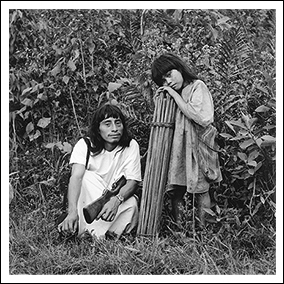
In the reposted article, the special emphasis is made on the miserable destiny of lacandones who became, consciously or unconsciously, traitors of their indigenous identity:

==While the members of the Lacandon Community are the beneficiaries of both the monthly REDD payment and access to vast territory, such benefits come at a high cost. In the words of Miguel Angél García, Coordinator of the  Chiapan NGO Maderas del Pueblo, “Of all the ethnic groups in Chiapas, the one that has suffered the greatest abuse of their rights are the Lacandones; they’ve been robbed of their history, of their identity, and of their dignity, and they’ve been turned into walking folkloric entities. There’s nothing worse than that.”==

Read the full text:


(La Selva Lacandona, Carretera Fronteriza. Photo is mine, year 2005)


A Broken Bridge to the Jungle: The California-Chiapas Climate Agreement Opens Old Wounds

11 Apr 2013

Prussian Colony On Mosquito Coast and Ferdinand von Tempsky

Gustavus Ferdinand von Tempsky (1828-1868), a Prussian soldier of fortune, a traveler, journalist and an artist, made a trip from California to Mosquito Coast to take up a command of Mosquito (Misquito) Indians squad which had been set up by Britain. On Mosquito Coast, there was also a Prussian and German colony due to activities of Moravian Church missionaries who made efforts to convert local creoles and Indians into protestantism.


Gustavus Ferdinand von Tempsky

Goetz von Houwald in his book "Los Alemanes en Nicaragua" ("Germans in Nicaragua") describes the conditions in which the German colony lived there, and their relationships with the British representatives:

(Read in Spanish... leer en espanol...)

9 Apr 2013

What have we done, Maggie, what have we done?


Pink Floyd - The Post War Dream 

Tell me true, tell me why was Jesus crucified
Is it for this that daddy died?
Was it you? Was it me?
Did I watch to much T.V.?
Is that a hint of accusation in your eyes?
If it wasn't for the nips
being so good at building ships
the yards would still be open on the Clyde
And it can't be much fun for them
beneath the rising sun
with all their kids committing suicide.
What have we done, Maggie what have we done
What have we done to England
Should we shout, should we scream
"What happened to the post war dream?"
Oh Maggie, Maggie what did we do?

8 Apr 2013

Evangelising Lacandons: Problems of Ethics

The Lacandon selva in Chiapas has become a bundle of problems - political, social, economic, ethnic and demographic - since the 70-s of the last century.


The sadly famous Law of the "Brecha Lacandona" was preceded by a series of government's attempts to preserve the selva from destruction caused by logging, cattle breeding, farming, migrating of population and other invasions which threatened its integrity. (Read more...)

7 Apr 2013

Mockery of Liberal Ideas in Russian Blogosphere

We have found a fascinating article in Spanish Wikipedia about Lev Shcharanski.

Shcharanski is a ficitious character mocking Russian liberals and dissidents who are taking desperate efforts to establish American-style democracy in Russia. Shcharanski and his "fans" demonstrate the absurdity of neo-liberal idea by exagerrating its slogans and mottos.

Lev Shcharansky's image is generally depicted as Alexander Solzhenitsyn whose dissent has always been widely rejected by majority of the Russian general public.

(download .xps file with Wiki Article)
Also see: Parody and Dissent

Lev Shcharánski


Aleksandr Solzhenitsyn, el disidente soviético, las fotografías de quien se utilizan como la aparencia de Lev Shcharánski

Lev Natánovich Shcharánski (en rusoЛев Натанович Щаранский; en inglésLev Sharansky) es un personaje ficticio satírico en el Internet rusohablante que parodia a un ex disidente soviético. El personaje escribe en su blog en LiveJournal y en Twitter, donde utiliza las ideas de los liberales rusos modernos llevándolas al absurdo. Toma su apellido de Natan Shcharánski, el ex disidente soviético y político israelí.
El carácter de Shcharánski se utiliza también para desacreditar la votación en línea. Por ejemplo, en 2011 él ganó la encuesta en línea para determinar el «bloguero del año» organizada por la revista «Afisha».1

[editar]Referencias

[editar]Enlaces externos

12 Mar 2013

Quiptic: Peasant Movement and Conflict Resolution in Chiapas

It is worthy to note that neo-Zapatista movement was preceded by organised "campesino" unions of the Selva Lacandona.  They resisted the so-called Presidential Decree of the "Lacandon Breach" ("La Brecha Lacandona") by which the majority of selva lands was granted to the Lacandon community (tribal people living in the selva for about 300 years) which deprived other indigenous people in this area of their titles to the same land.  The controversial nature of this decree may be explained in the context of Mexican government's agrarian policy in 40-60s which focused  mainly on colonisation of "unpopulated" lands  and preferring rather the extensive, not intensive development of its agrarian sector.  In search for new lands, thousands of indigenous migrants from the states of Guerrero, Michoacan, Morelos, Chihuahua as well as from other regions of Chiapas moved to the Selva Lacandona trying to establish their homes there. Through a decade, settlers were motivated and commended by the Mexican Government and Secretaria de la Reforma Agraria (Ministry of Agrarian Reform) who legally granted them titles for "unpopulated" lands hoping to resolve the vibrant Mexico's issue of the 60-s - deficiency of land.

The settlers' land titles became invalid when the Decree of the "Brecha Lacandona" was enacted in 1973. Of course, the Presidential Decree envisaged the following re-settlement of peasants from the area of the Selva Lacandona (called "Lacancon Community") and special re-settlement programmes were taken.  Nevertheless, indigenous settlers of the Selva (tzeltal, chol, tzotzil and tojolabal indigenous peoples) resisted the displacement and rightly saw it as a consequence of unlawful and inconsistent agrarian policy of the Government.

In 1975, then biggest campesino union Quiptic Ta Lecubtesel was created uniting 23 resisting settlements ("Quiptic"). Marcela Acosta Chavez, researcher of Quiptic, notes that resistance to the unjust Presidential Decree was the main organising factor in strenghening and uniting of the Selva peasants (Marcela Acosta Chavez, "La Quiptic Ta Lecubtesel"). They managed to organise their representation and negotiated with Chiapas government their land titles by urging them to resolve the real root of the conflict (land deficiency),  and opposing  government's usual "quick solutions" which they saw in replacement of "irregular" indigenous settlements.

This was the first attempt in the modern Chiapas history to resolve the main and long-lasting Chiapas conflict: deficiency of land and uneven distribution of income, which later developed in Zapatista rebellion and San-Andres Accords.

20 Feb 2013

Mediators' Position in Armed Conflicts (Zapatista case)

(a Russian opinion or, rather, question relating to the well-known Mexico's event)

It seems interesting how Mexican CONAI (National Comission for Intermediation) defines their moral position while negotiating the peace between government and indigenous rebels.

The CONAI was created in 1995 by Chiapas bishop Samuel Ruiz Garcia with views to help establish the peace process after armed rebellion by EZLN ( indigenous neo-Zapatistas) which took place on 1 January 1994. Immediately after the conflict, a very unstable truce was established in Chiapas, so bishop Samuel Ruiz put forward his peace initiative proposing himself and his Commission as mediators between the rebels (who were mostly of his congretation) and the government.  Soon CONAI was recognised by then Mexican president Carlos Salinas de Gortari as a lawful mediator between the EZLN and Government representatives.

Anyway, after three-year process of peace negotiations, in 1998 the CONAI withdrew from the negotiation process.  Bishop Ruiz explained this action as a protest again government's infulfilment of San-Andres Accords.  In response to this claim, he was accused by various officials of "evading his mediator's duty" and "non-neutrality".  Indeed, mediators' code of conduct reads that they shall be neutral and promote the process of negotiation by being impartial and free of any personal or political preferences, as well as be adamant against any external pressure.

Miguel Alvarez Gandara, then CONAI Secretary, explained the  Commission's moral position by arguing their moral standpoint:

The CONAI, -  he said, - was an independent entity which was impartial to all parties in the conflict. The accusations of non-neutrality refer mostly to CONAI's moral position which they assumed from the very beginning of the armed conflict - the CONAI was seeking to build the type of negotiation which would eliminate the real roots of the conflict, and namesly, disrespect and exclusion of indigenous peoples of Mexico. The only resolution of the conflict, as it was seen by multiple experts, opposition politicians, observers and majority of Mexicans, might be found  only in pursuing the appropriate and relevant constitutional reforms granting indigenous peoples the status of "public law entities", not "objects" by public law to be easily manipulated by unstable and ever changing political situation.

Pablo Gonzalez Casanova, one of the Mexican most prominent intellectuals, ex rector of the UNAM (Autonomous University of Mexico) and a former member of CONAI,   formed this standpoint by saying that he "cannot remain neutral while facing the truth."

Shall a mediator be neutral as it is demanded by his/her job position?  Shall he/she seek the real solution of the conflict, or confine himself with pacification measures only? What is the real objective of political mediation?

11 Feb 2013

Zapatistas' Mexican Agenda - Why Autonomy, Not Separatism?

Gary Gossen in his article "Maya Zapatistas Move to the Ancient Future" provides his view on one of the core points that Zapatistas demanded in the course of San-Andres negotiations:  this point is indigenous autonomy.

Why autonomy, but not separatism? Why neo-Zapatista agenda coincides with the national agenda of Mexico? Why Mayan Zapatistas do not see their future apart from the Mexican state and Mexican nation? Why do they want to be Mexicans?

Gary Gossen, one of the most prominent Mayanists undertakes to answer these questions, and his arguments seem to be quite convincing. Gossen argues that among the Tzotziles, for example, foreign "heroes", regardless of their positive or negative nature in indigenous perceptions, are very commonly taken as a "necessary precondition for collective identity within the Chamula pattern of  historical memory and being in the present" (see Gossen 1993).

For example, Miguel Hidalgo (the father of Mexican Independence) and Erasto Urbina (local hero of Chiapas) are both ladinos and bearers of Mexican mestizo culture, yet Mayan Indians perceive them as part of their indigenous history. Emiliano Zapata, a  "campesino" leader of the Mexican Revolution and also being mestizo (not Indian) has become a hero of the Mayan indigenous peoples of Chiapas.  From the point of view of religion, Catholic saints have always played and are playing a very important and active role in modern Mayan panteon:  in particular, St Jerome is considered to be a keeper of animals and animal soul's companion (nahualli). At the same time, surprisingly, the heroine of the Mexican history and "mother" of all Mexicans, legendary Malinche is known in Chamula culture as "Nana Maria Cocorina", wearing a ladino dress "and is ritually addressed as xinulan antz, "stinking ladino woman"."

So why ladinos have become an inseparable part of the Mayan culture? Why sub-comandante Marcos, also being a ladino among Indians, has been entrusted the role of spokesperson of the Mayan rebels?

According to Gary Gossen, "Mayans have always constructed enthnicity, cosmology, historical reckoning and political legitimacy by drawing freely from symbolic and ideological forms of other ethnic and political entities - particularly those perceived to be stronger than themselves - in order to situate and center themselves in the present.  Therefore, what I have identified as the apprently anomalous and peculiar link of the Zapatistas to foreign alliances and symbolic affiliations - including Marcos, white foreign martyrs, the paladin of Zapata and the Mexican revolutionary ideology that he embodies - is not at all strange to the Maya imagination.  In fact, such alliances appear to have been a centrally important strategy for Maya cultural affirmation and political legitimacy since well before the contact period."

25 May 2012

Problems of Translation


Attention: Marta-Yolanda Diaz-Duran, Libertopolis

I was accused of being an author of a  "communist" blog who made a bad translation of Libertopolis interview regarding conflict between Russia & Georgia and presidential elections in Russia.

As far as I understand from the above Facebook link, my parents were called to school, and I was discussed at the Todo a Pulmon radio programme of Libertopolis (under Francisco Marroquin University), making me (or at least, my translation) famous all around Guatemala.

(Or otherwise, I was not honoured enough to be mentioned in the said programme -  anyway, I am quiet about that).

I admire the naivity of persons who genuinely believe the manipulators who are telling them "all the truth".   As a matter of fact, it is exactly Mr Toursinov who is acting here as a manipulator making Marta-Yolanda think that  "communists" of the city have captured the radio station, banks, a telegraph and internet.  Frankly, the reasons that made Mr Toursinov write this message about "bad translation" are purely personal, not political, and "communist blogs"  have nothing to do with this. The real reason is that by that message Mr Toursinov made a preliminary step saving his... well, I will say this word - ass, and preventing the disclosure of the fact that he does not comply with academic Code of Conduct, which notice may come to the attention of his superiors in the Marroquin University (or Rafael Landivar University). As we know, the discipline - for students as well for academics - in UFM is extremely demanding and severe.

You want further explanations? I am Mr Toursinov virtual opponent from Russia, being an independent researcher of Latin America with focus on Mexican and Guatemalan indigeous peoples.  He knows me personally,  and he is lying that "he was sent a link from Russia", because he is constantly and nervously monitoring my blog himself.  He fears that I may deliberately or unintentionally mention his fabulous adventures on the Russian internet by giving out particular details of his ardent and peculiar struggle against "communists" in the Russian blogosphere. I swear, if you heard the details, you'd really be HORRIFIED, and none of bad translations would ever be able to produce a similar horror on you. It has nothing to do with politics, it's just a matter of  violating the professional ethics by virtual harassment on the Internet and personal insults of myself, my family and my children.  Mr Toursiov naively thinks that if nobody there in Guatemala speaks Russian, his mischiefs will come unnoticed. He is mistaken.

I left a notice about this incident in my Russian Livejournal diary (all in Russian), yet I think that I owe Marta-Yolanda the courtesy of some explanations. Segun se dice, lo prometido es deuda, pues le debo, Marta-Yolanda, y mientras, que se relaje Sr Toursinov es que yo soy muy apurada en estos dias,)) y no tengo mucho tiempo. Sin embargo, lo recuerdo y volvere con mas explicaciones, sin duda ninguna.

p.s. The translation is OK, there is nothing added nor detracted or intentionally distorted. The transcript of video was made by a native Spanish-speaker, and I personally have been in translation for many years, and my translations were "authorised" by a number of international projects.

p.p.s. If this blog be frozen (Mr Toursinov is doing his best to close down or cripple my other blogs, especially on LiveJournal) please make a search for my nick on the internet, and you will find my response.